Experiments

Planned and running experiments on Gaussian-diffusion speculative decoding.

GDFlash architecture
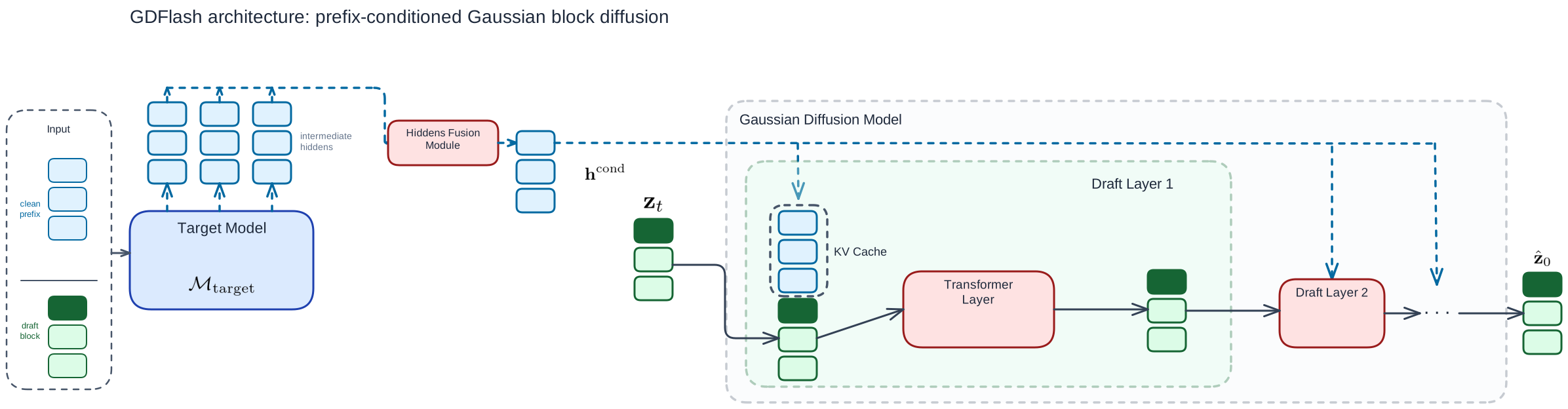
GDFlash architecture: intermediate target hiddens pass through the Hiddens Fusion Module into h_cond and per-layer KV caches; the noisy latent block z_t flows through draft transformer layers to produce z0_hat

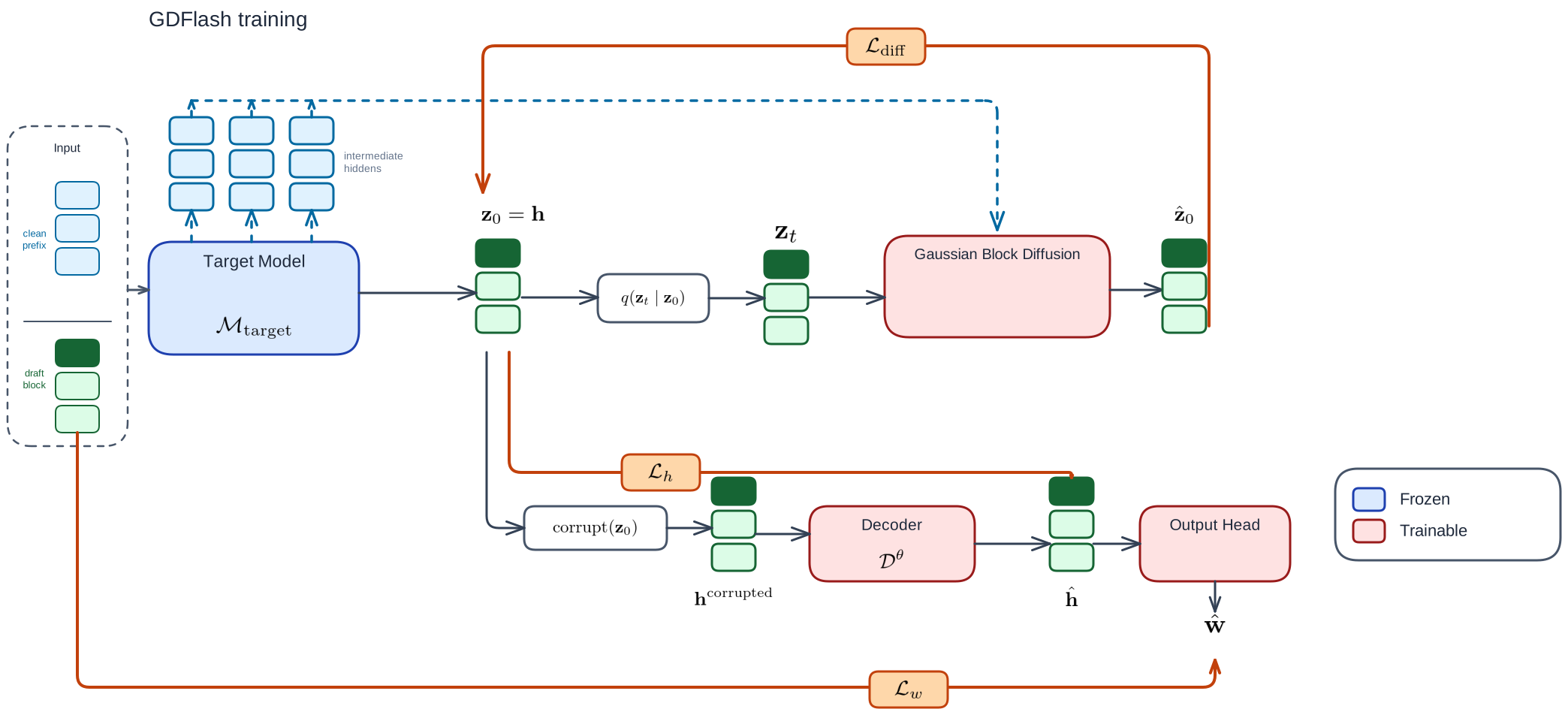
GDFlash training

GDFlash training: frozen target model produces z0 = h; forward noising gives z_t; the Gaussian Block Diffusion module, conditioned on prefix hiddens, predicts z0_hat with diffusion loss; a decoder path with corrupt(z0), MSE hidden loss, and output head token loss

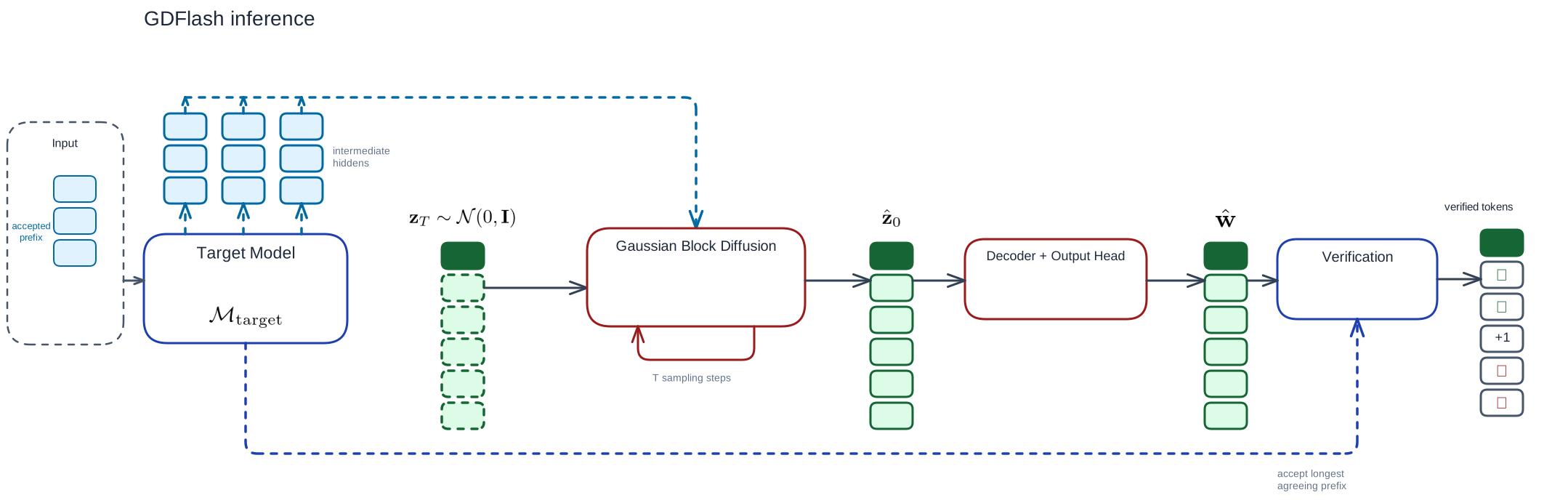
GDFlash inference

GDFlash inference: the target model conditions the Gaussian Block Diffusion drafter on prefix hiddens; T sampling steps denoise z_T into z0_hat, decoded into a draft block that the target model verifies, accepting the longest agreeing prefix

Diagram sources: gdflash/diagrams/gdflash_{architecture,training,inference}.mjs in the research repo (each generates an .excalidraw editable on excalidraw.com).

DFlash baseline

Block-diffusion DFlash drafter as the reference baseline — previously conducted on the 100k cache, to be re-run on the full PerfectBlend setup.

TEncDM GDFlash

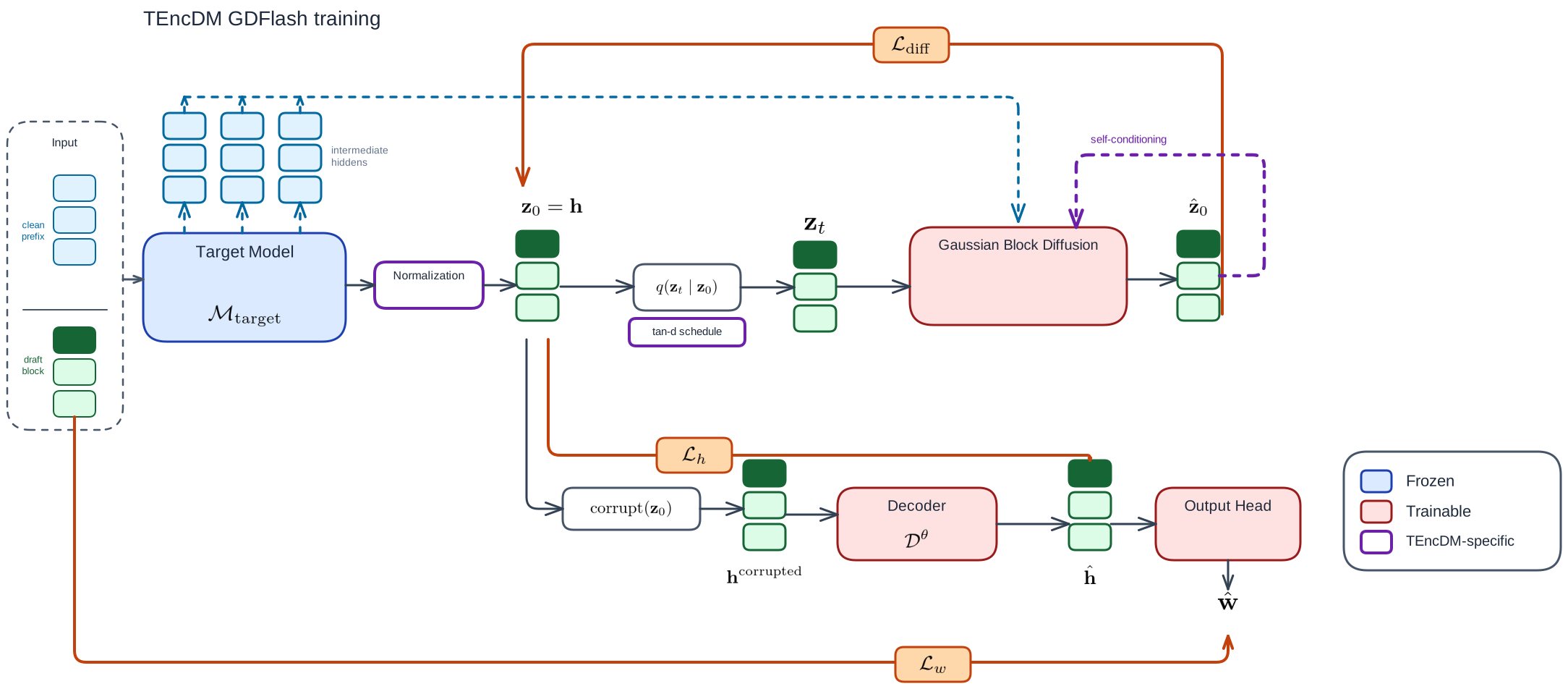
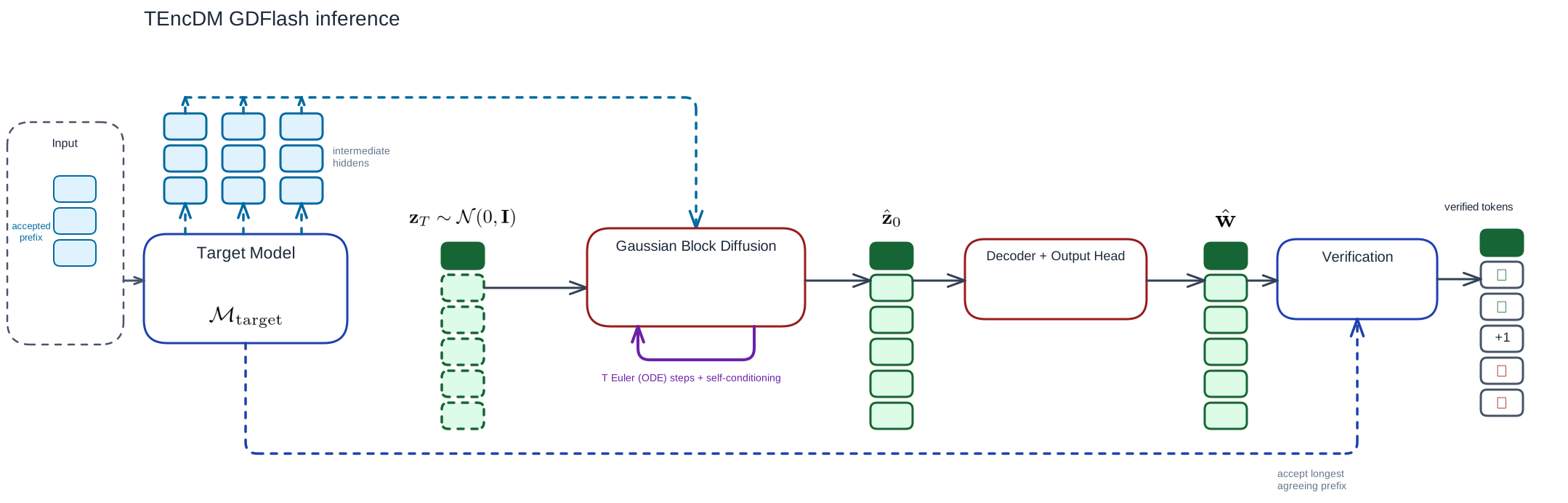
Gaussian diffusion follows the TEncDM recipe: normalized target encodings, tan-d noise schedule, self-conditioning, Euler (ODE) sampling. TEncDM-specific elements are highlighted with bold purple borders in the diagrams.

Diagrams: architecture / training / inference
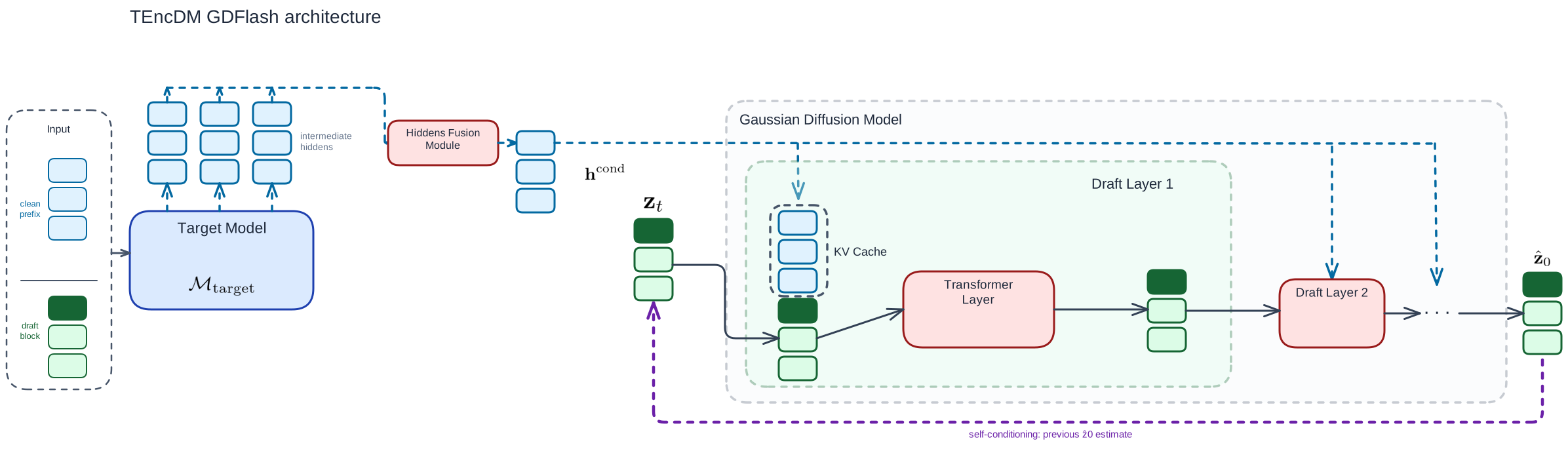
TEncDM GDFlash architecture with purple self-conditioning feedback

TEncDM GDFlash training with purple normalization module, tan-d schedule, and self-conditioning

TEncDM GDFlash inference with purple Euler steps and self-conditioning loop